marokko-travel.comMorocco Specialist
A majestic journey starting in Casablanca covering Rabat, Chefchaouen, Fes, Merzouga desert dunes, Todra Gorges, and Marrakech.
This premium 10-day private itinerary "10-Day Morocco Desert Tour from Casablanca" starts directly in CASABLANCA and takes you on a deep journey into the true magic of Morocco. Traveling in comfort with a private air-conditioned vehicle and your own dedicated, professional driver, you will discover stunning contrasts: from the bustling medieval medinas and ancient handcraft quarters to the dramatic snow-capped peaks of the High Atlas Mountains. The supreme highlight is a spectacular camel trek at sunset into the golden Erg Chebbi dunes of the Sahara, followed by an unforgettable overnight stay in a high-end luxury nomadic camp. Complete with handpicked authentic Riads, guided local historical walks, and absolute flexibility, this tour represents the ultimate customizable Moroccan escape designed around your pace.
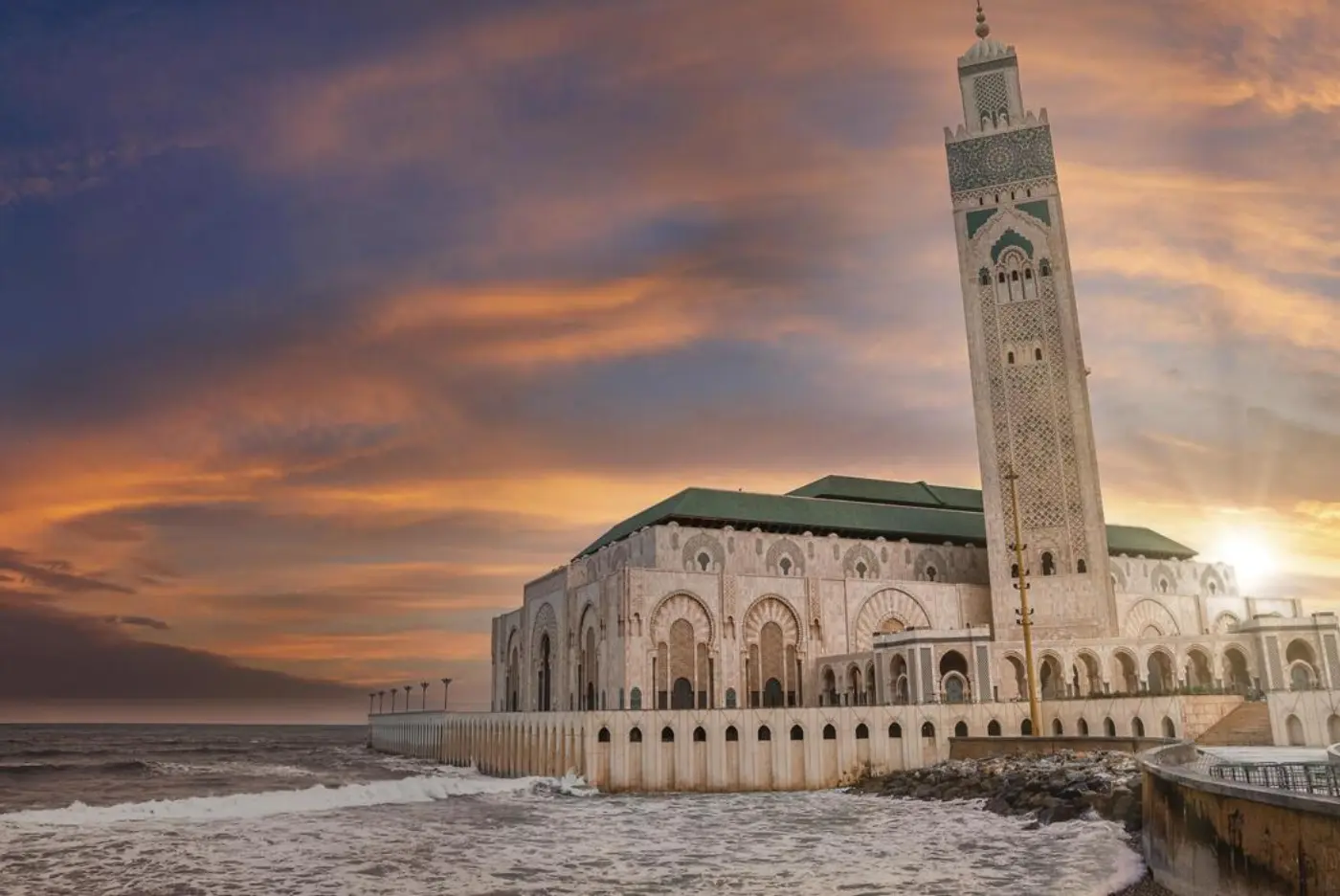
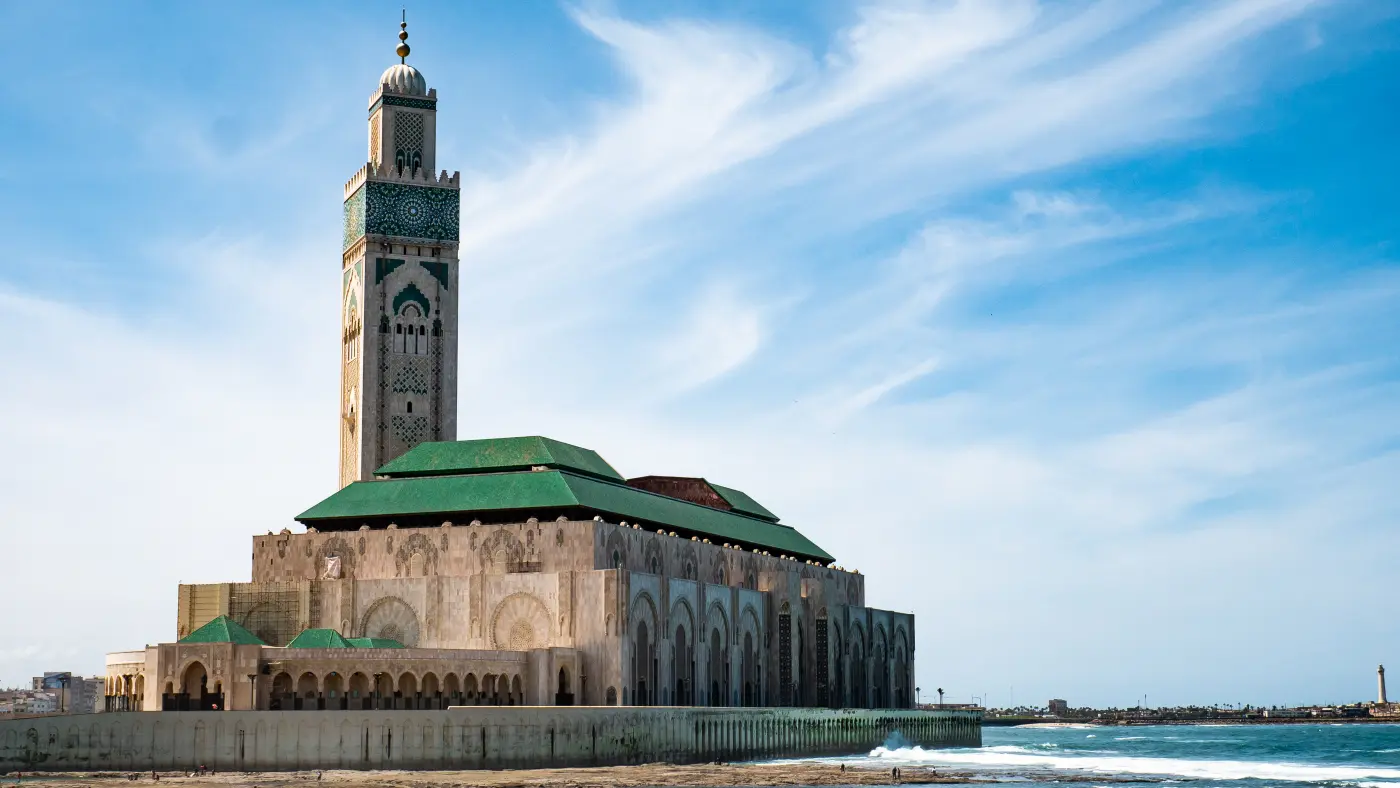
Your journey begins the moment you land at Mohammed V International Airport, where your private driver will be waiting in the arrivals hall holding a sign with your name. There is no rush, no queueing for shared shuttles, and no confusion about where to go next — just a warm Moroccan welcome and a comfortable, air-conditioned vehicle waiting to take you into the city. Casablanca is Morocco's largest city and its undisputed economic capital, a sprawling, modern metropolis that feels quite different from the more traditional imperial cities you will visit later in this trip, and it makes a fitting, easygoing introduction to the country. Depending on your arrival time, your driver may suggest a short stop at the Hassan II Mosque, one of the largest mosques in the world and one of the very few in Morocco that non-Muslim visitors are permitted to enter. Perched dramatically on a rocky outcrop over the Atlantic Ocean, with a 210-metre minaret that dominates the skyline, it was completed in 1993 and combines traditional Moroccan zellige tilework, carved cedar wood, and hand-chiselled stucco with modern engineering, including a retractable roof and heated floors. Even from the outside, the scale and craftsmanship are genuinely impressive, and it is one of the few places where you can appreciate the artistry that goes into Moroccan religious architecture up close. After your stop, you will be transferred directly to your riad or hotel in the city centre. Check-in is relaxed and unhurried, giving you time to freshen up after your flight. In the evening, we recommend a short walk to a nearby café to try your first glass of Moroccan mint tea — poured from height in the traditional style — along with a plate of fresh pastries or olives. This is also a good opportunity to ask your driver or riad host any questions about the days ahead, adjust timings if needed, and simply settle into the rhythm of Moroccan hospitality before the road trip begins in earnest tomorrow. There are no rigid schedules today; the goal is simply to arrive, breathe, and get a first, gentle feel for Morocco before the more adventurous days that follow.
Today we will begin with an early breakfast at your riad before setting off north along the Atlantic coastal highway toward Rabat, Morocco's political capital and one of its four Imperial Cities. The drive takes around an hour, and along the way your driver-guide will explain the historical relationship between Rabat and Casablanca and what to expect as we move deeper into the country's royal heritage. In Rabat, we will spend a couple of hours exploring the highlights: the Kasbah des Oudayas, a fortified 12th-century citadel of narrow blue-and-white lanes overlooking the mouth of the Bou Regreg River, where you can wander through the Andalusian Gardens and take in sweeping views of the Atlantic; and the Hassan Tower, the unfinished minaret of what was intended to be the largest mosque in the world in the 12th century, standing alongside the Mausoleum of Mohammed V, an exquisite example of modern Alaouite architecture guarded by the Royal Guard in traditional dress. After lunch (at your own expense, at one of the many small local restaurants around the medina), we continue north on a scenic three-hour drive through the rolling Rif foothills toward Chefchaouen, the famous 'Blue City'. As the road climbs into the mountains, the landscape changes noticeably — pine forests, terraced hillsides, and small Berber villages replace the flat coastal plains. Founded in 1471 as a small fortress to defend against Portuguese invasion, Chefchaouen later became a refuge for Muslim and Jewish families fleeing the Spanish Reconquista, which explains its distinctly Andalusian character. We will arrive in the late afternoon, in time for golden-hour light on the blue-washed walls — considered the best time to photograph the town, as the low sun brings out every shade of blue, from pale sky to deep indigo. Check in to your riad within the medina and spend the remainder of the evening wandering the impossibly photogenic alleyways at your own pace, browsing woven blankets and handmade goat's cheese sold by mountain Berbers, and enjoying dinner at a rooftop restaurant overlooking the Rif Mountains as the town lights begin to twinkle below.
After breakfast on a sunlit rooftop, we dedicate the morning entirely to Chefchaouen itself, without an early departure — this is one of the most photogenic towns in Morocco and deserves unhurried time. Your guide will lead you through the upper medina, past Plaza Uta el-Hammam and the 15th-century Kasbah fortress with its small ethnographic museum and garden, before letting you loose to wander independently through the maze of blue-painted stairways, doorways, and flower pots that make the town so beloved by photographers. This is an excellent opportunity to pick up local wool garments, hand-woven rugs, or the region's distinctive soft goat's cheese, and to simply enjoy a slower pace before the long drive ahead. Around midday, we begin the journey south toward Fes, Morocco's spiritual and cultural capital. The route descends out of the Rif Mountains through changing scenery — cork oak forests give way to olive groves and open agricultural plains as we approach the Fes-Meknes region. Along the way, your driver will typically stop at a scenic viewpoint or a roadside café for a coffee break and leg stretch, and may point out the historic town of Ouazzane, known for its religious significance, if the route allows. We will arrive in Fes in the late afternoon. Founded in the 9th century, Fes is home to Fes el-Bali, the largest car-free urban area in the world and a UNESCO World Heritage Site since 1981, containing over 9,000 narrow alleyways. Rather than diving straight into the medina today, we recommend checking into your riad, resting briefly, and taking an easy introductory walk to get your bearings before tomorrow's full day of exploration. Dinner tonight can be enjoyed at your riad or a nearby restaurant, where you can try a proper Fassi tagine — Fes is widely considered the culinary capital of Morocco, and dishes here tend to be richer and more refined than elsewhere in the country, a legacy of the city's centuries as the seat of Moroccan royal courts and scholarship.
Today is dedicated entirely to Fes, and we recommend an early start — around 9am — to explore the medina before the midday heat and crowds build up. Our driver will hand you over to a licensed local guide (compulsory in Fes, as the medina's 9,000-plus alleyways are notoriously easy to get lost in) who will lead you on foot through Fes el-Bali, the ancient walled city and a UNESCO World Heritage Site. We begin at Bab Boujloud, the ornate blue-and-green tiled 'Blue Gate' that marks the medina's main entrance, before winding through the souks organised by traditional guild — metalworkers hammering brass trays, weavers at wooden looms, leather workers, and spice merchants with pyramids of saffron, cumin, and ras el hanout. A highlight of the morning is a visit to the Chouara Tannery, one of the oldest tanneries in the world, dating back to the 11th century, where hides are still dyed by hand in stone vats using traditional methods largely unchanged for a thousand years — you will be offered a sprig of fresh mint to hold to your nose against the strong smell, a tradition every visitor experiences. We will also visit the exterior of the Al-Qarawiyyin Mosque and University, founded in 859 AD by Fatima al-Fihri and recognised by UNESCO and Guinness World Records as the oldest continuously operating educational institution in the world — non-Muslims cannot enter, but the ornate courtyard is visible through the main gate. Other stops typically include the Bou Inania Madrasa, celebrated for its intricate cedar wood carving, carved stucco, and zellige tilework, and a working cooperative where Berber women weave and dye traditional carpets, offering insight into the techniques and symbolism behind the patterns. Lunch is taken at a traditional Fassi restaurant, often set around a tiled courtyard, serving specialities such as pastilla (a sweet-and-savoury pigeon or chicken pie dusted with cinnamon and sugar) or a slow-cooked lamb tagine with prunes and almonds. The afternoon continues at a gentler pace, with time to browse the souks for ceramics, leather goods, or brassware, before returning to your riad in the late afternoon. This evening is free — many guests choose to enjoy a traditional hammam and massage at their riad's spa, a well-earned moment of relaxation before the long desert-bound drive that begins tomorrow.
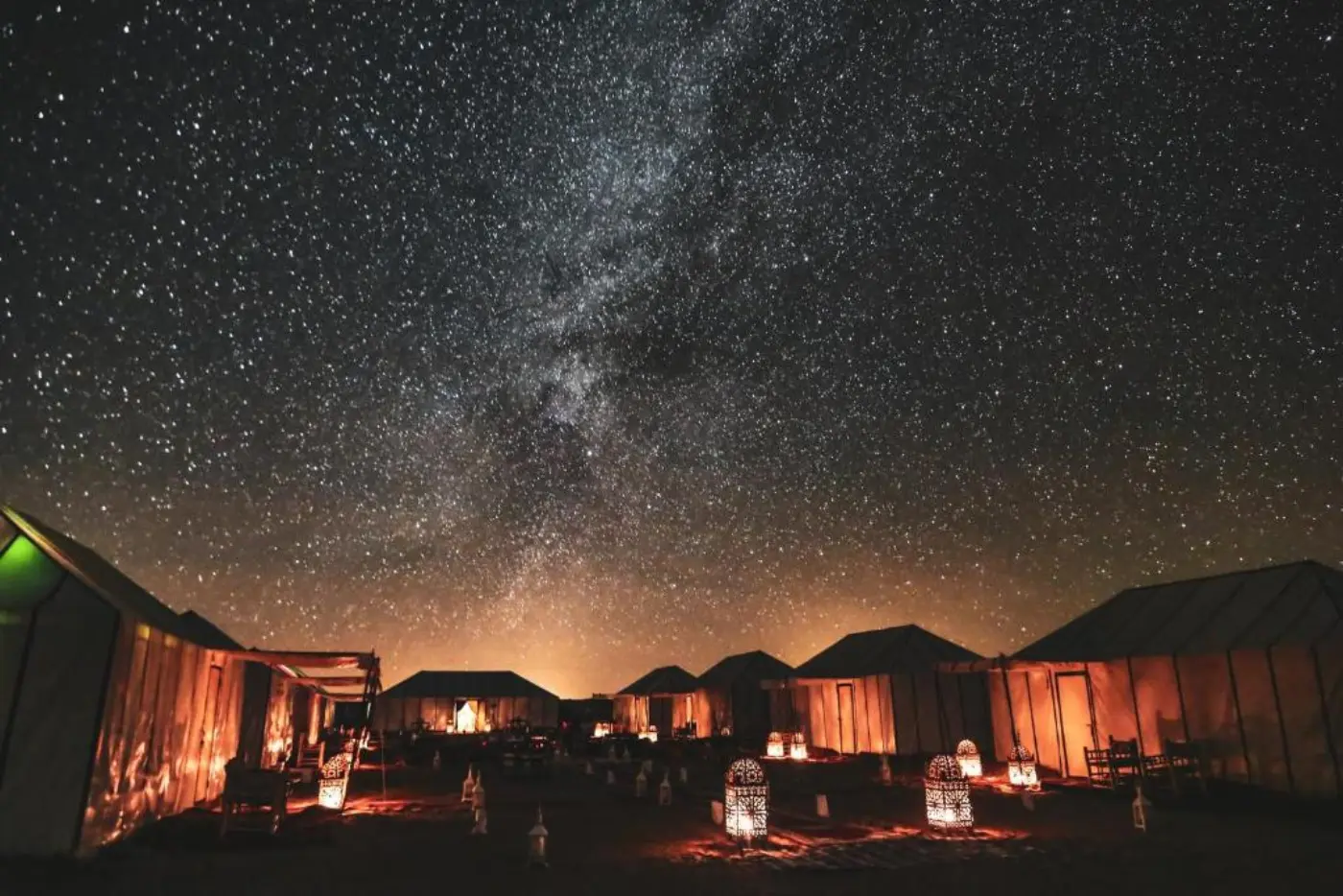
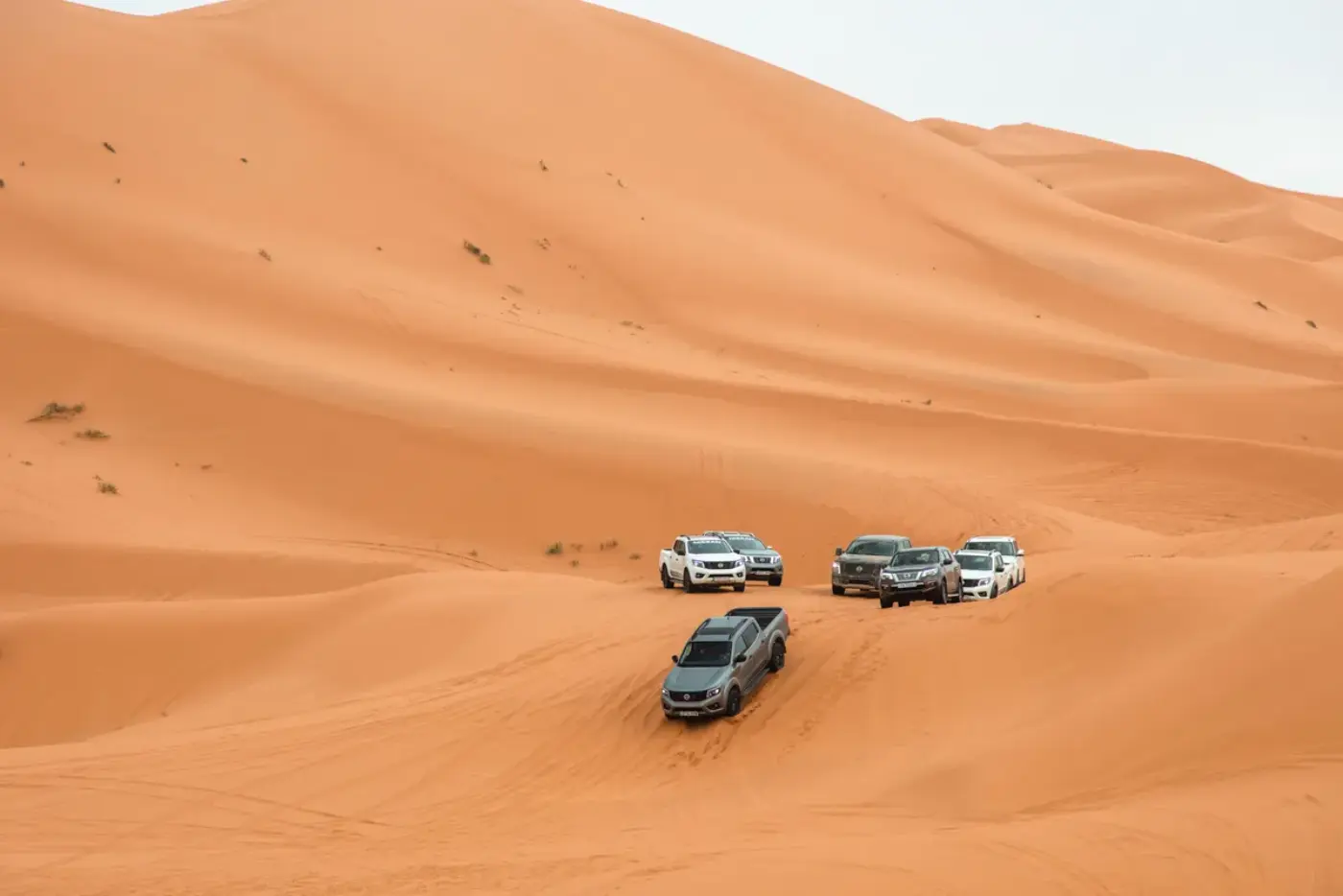
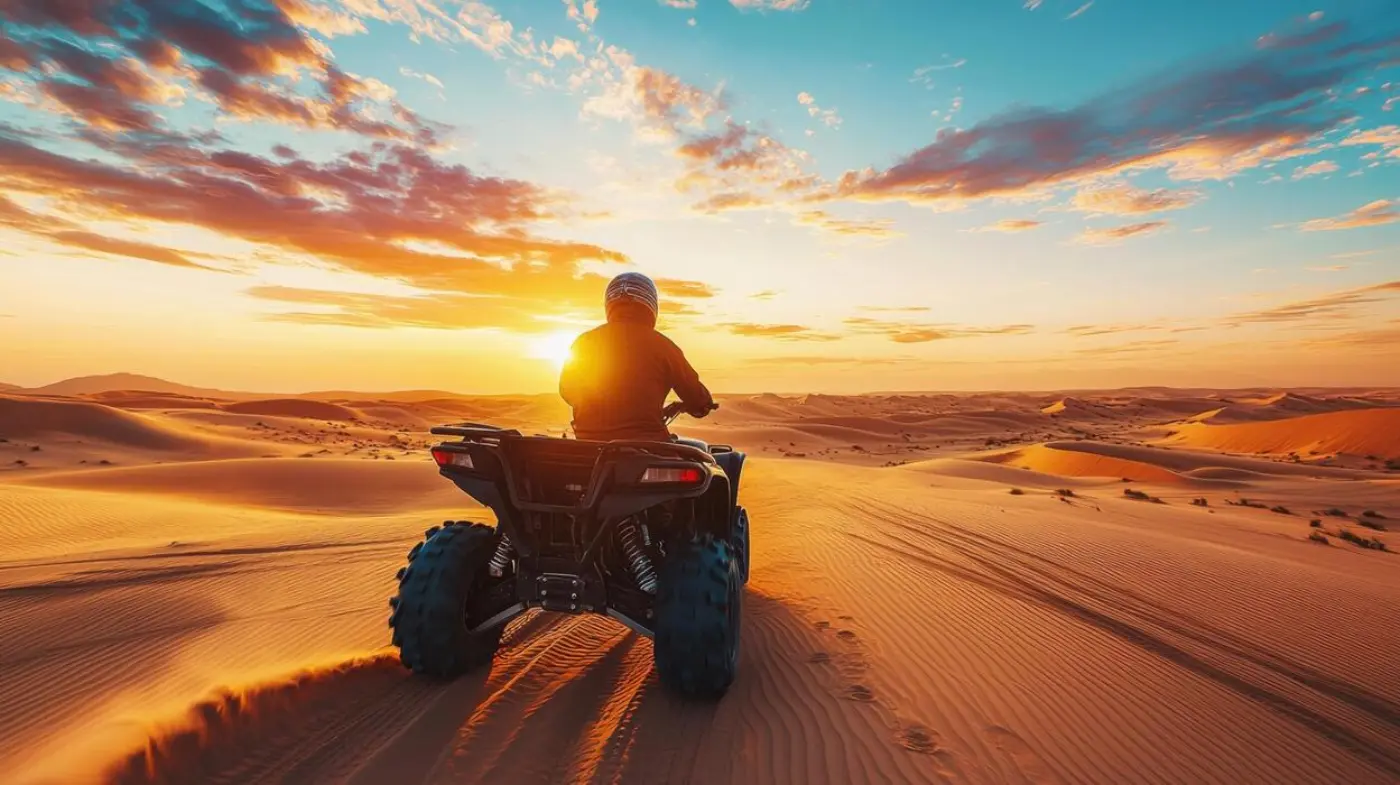
Early departure this morning — we recommend leaving Fes by 8am, as this is one of the longer and most spectacular driving days of the trip. Heading south, the road climbs steadily into the Middle Atlas Mountains, and within an hour the flat plains around Fes give way to pine and cedar forest. Our first proper stop is Ifrane, a curious alpine-style town built by the French in the 1930s, with sloped red roofs and chalet-style buildings that feel more like the Swiss Alps than North Africa — it even sees occasional snowfall in winter. From here we continue to the Azrou Cedar Forest, home to some of the largest and oldest Atlas cedars in the world, some estimated at over 800 years old, and — weather and season permitting — a resident troop of wild Barbary macaques (often simply called Barbary apes), one of the few primate species found outside Asia and Africa's tropical regions. Your driver will stop here for twenty to thirty minutes so you can walk among the ancient trees and, with luck, get close to these curious, semi-habituated monkeys. Continuing south, the landscape shifts dramatically as we descend the far side of the Middle Atlas toward Midelt, a former mining town known for its apple orchards and as a gateway to the High Atlas. We typically stop here for lunch — a good opportunity to try a Berber omelette or a simple tagine at a local restaurant. From Midelt, the road follows the dramatic Ziz Gorges and then the Ziz Valley, an extraordinary ribbon of palm groves and mudbrick ksour (fortified villages) that snakes through an otherwise barren, rocky landscape — a genuine oasis in every sense, fed by the Ziz River, and one of the most photogenic drives in Morocco. We will make several photo stops at panoramic viewpoints overlooking the valley. As the afternoon light softens, we arrive in Merzouga, on the edge of the Erg Chebbi dune sea, where a 4x4 vehicle or camel handler will meet us to begin the final leg into the desert. Leaving the paved road behind, you will mount your camel for a genuinely unforgettable sunset trek across the dunes — the changing colours of the sand as the sun drops toward the horizon are difficult to describe and impossible to forget. After roughly 45-60 minutes of gentle camel trekking, we arrive at our exclusive desert camp, nestled among the highest dunes in Morocco (reaching over 150 metres). Settle into your comfortable Berber tent, enjoy a traditional dinner cooked over an open fire, and later, gather around the campfire as local Berber musicians play traditional drums and sing under what is, on a clear night, one of the most spectacular starscapes anywhere on Earth — Merzouga's remoteness and lack of light pollution make it a genuine dark-sky destination.
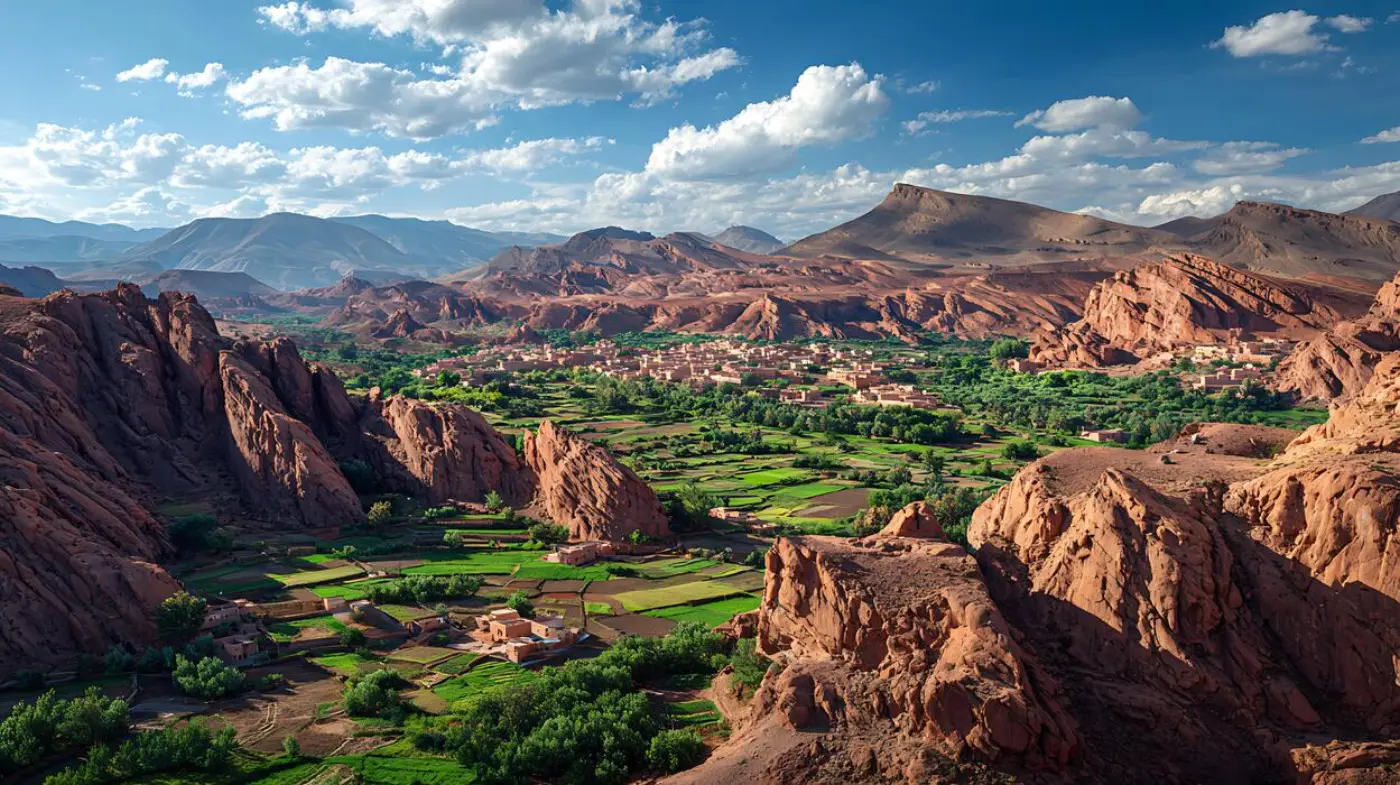
For those willing to wake before dawn — and we highly recommend it — this morning offers one of the most memorable experiences of the entire trip: climbing a nearby dune in the dark to watch the sunrise over the Sahara. As the first light breaks over the endless sea of orange dunes, the desert seems to change colour by the minute, from soft pink to deep gold. Afterwards, return to camp for a simple Berber breakfast of flatbread, honey, olive oil, and sweet mint tea before saying goodbye to your camel guides and driving back out of the dunes by 4x4 to Merzouga village, where our main vehicle and driver will be waiting. From here, we begin the drive west toward Todra Gorge, one of Morocco's most dramatic natural landmarks. The road passes through Tinghir, a large oasis town, before entering the gorge itself, where sheer pink and orange limestone cliffs rise up to 300 metres on either side of a narrow river-carved canyon, in places barely 10 metres wide. We will stop here for an hour or so, allowing time for a short walk along the canyon floor, photographs of the towering rock walls (a popular spot for rock climbers from around the world), and perhaps a mint tea at one of the small cafés built directly into the cliffside. Lunch is typically taken in Tinghir or a nearby village, often at a terrace restaurant overlooking the palm oasis below. In the afternoon, we continue along the aptly named Road of a Thousand Kasbahs toward the Dades Valley, also known as the Valley of Roses for the Persian rose bushes cultivated here and used in the region's famous rosewater and cosmetics industry (if you are travelling in May, you may catch the annual rose harvest). The valley itself is striking — dramatic folded rock formations, sometimes called the 'Monkey Fingers' for their unusual eroded shapes, rise above a green ribbon of almond and fig orchards, dotted with earthen kasbahs in various states of preservation. We will check in to a traditional kasbah-style hotel for the night, many of which offer wonderful terrace views over the valley, and enjoy a relaxed dinner as the sun sets behind the rock formations.
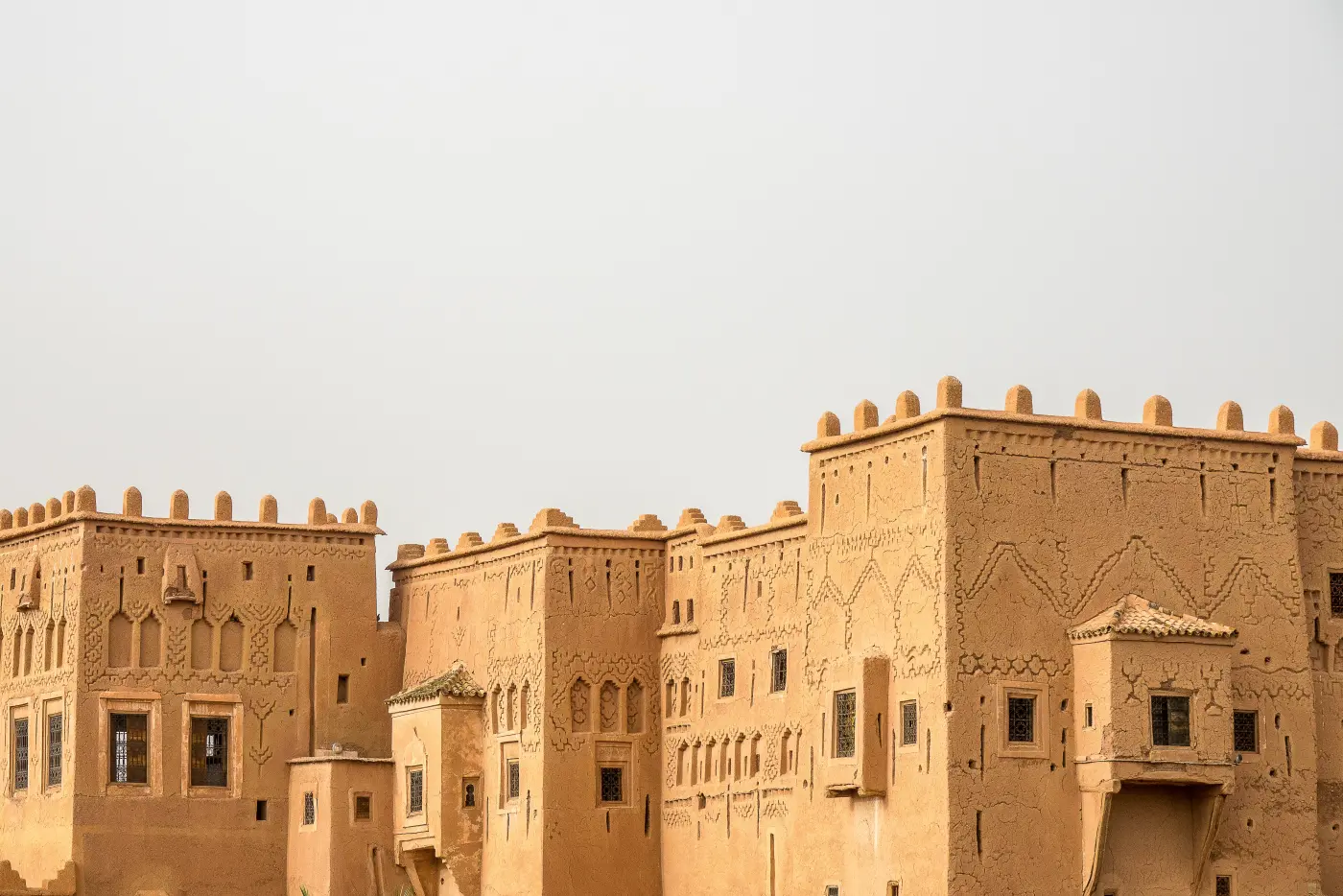
After breakfast overlooking the Dades Valley, we set off toward Ouarzazate, often nicknamed the 'Door of the Desert' and, more recently, the 'Hollywood of Africa' thanks to the Atlas Film Studios located here, where blockbusters including Gladiator, Kingdom of Heaven, and television series such as Game of Thrones have been filmed, taking advantage of the region's dramatic desert scenery and consistent sunlight. Depending on time and interest, we can arrange a stop at the studios or at the Taourirt Kasbah, a former residence of the powerful Glaoui family that once controlled much of southern Morocco, and one of the finest examples of traditional earthen architecture in the country. From Ouarzazate, a short drive brings us to the true highlight of the day: Ait Ben Haddou, a fortified ksar (a collective of earthen buildings enclosed by defensive walls) perched above the Ounila River and inscribed as a UNESCO World Heritage Site since 1987. Dating back to the 17th century and built along the historic caravan route between the Sahara and Marrakech, Ait Ben Haddou is one of the best-preserved examples of pre-Saharan earthen architecture anywhere in the world, and its dramatic silhouette has appeared in numerous films, including Lawrence of Arabia and Gladiator. We will take a guided walk up through the narrow lanes of the ksar to the old agadir (communal granary) at the top, where a small entrance fee grants panoramic views over the surrounding valley — genuinely one of the most photographed sites in Morocco. After lunch nearby, our driver will begin the spectacular ascent of the Tizi n'Tichka Pass, the highest major mountain pass in North Africa at 2,260 metres, which winds through the High Atlas Mountains via a long series of switchbacks with sweeping views over terraced Berber villages, almond groves, and geological formations exposing colourful mineral deposits. This is one of the most scenic — and most photographed — drives in the entire country, and your driver will stop at several viewpoints along the way. Roadside stalls sell local minerals, geodes, and amethyst, a specialty of this region. As the road finally descends the western side of the Atlas, the terrain flattens out and the palm groves surrounding Marrakech come into view. We arrive in the late afternoon and check in to your riad in the heart of the medina, with the evening free to rest after a long but unforgettable day of driving, or to take an early stroll toward Jemaa el-Fna square to get a first taste of Marrakech's famous evening energy.
This morning our driver will hand you over to a local guide for a full day exploring the 'Red City'. We typically begin early, before the heat and crowds build, at the Bahia Palace, a 19th-century masterpiece commissioned by a powerful vizier and named 'Bahia' (meaning 'brilliance'), featuring elaborately carved cedar ceilings, painted stucco, and a series of tranquil courtyards and gardens designed to showcase the wealth and taste of its original owner. From there, we continue to the Saadian Tombs, a royal necropolis dating to the late 16th century that lay sealed and forgotten for nearly 300 years until it was rediscovered in 1917, renowned for the exceptional Italian Carrara marble and gold-leaf detailing of the Chamber of the Twelve Columns. Depending on the day of your visit, we may also include the Koutoubia Mosque — Marrakech's largest mosque and most recognisable landmark, whose 77-metre minaret, completed in the 12th century, inspired the design of the Giralda in Seville and the Hassan Tower in Rabat — viewed from its surrounding gardens, as non-Muslims cannot enter. Around midday, we visit the Jardin Majorelle, a stunning botanical garden created by French painter Jacques Majorelle in the 1920s and later restored and owned by fashion designer Yves Saint Laurent, celebrated for its vivid cobalt-blue buildings, bamboo groves, and collection of cacti and exotic plants from five continents — a genuinely peaceful escape from the bustle of the medina. Lunch is at a local restaurant, often with rooftop views over the city. In the afternoon, we head into the heart of the souks, Marrakech's sprawling network of covered markets, organised loosely by trade — leather goods, lanterns, spices, textiles, and traditional Berber carpets — where your guide can help you navigate the (expected and quite fun) art of bargaining. As the afternoon draws to a close, we make our way to Jemaa el-Fna, the main square and a UNESCO-recognised 'Masterpiece of Oral and Intangible Heritage of Humanity', which transforms dramatically after sunset as dozens of food stalls, storytellers, musicians, and henna artists set up for the evening. We recommend staying here for dinner at one of the open-air food stalls — a lively, sensory introduction to Moroccan street food, from grilled meats and merguez sausage to fresh orange juice and steaming bowls of snail soup, all part of the square's centuries-old tradition.
After eight days of driving and sightseeing, today is intentionally left free and unstructured, giving you the flexibility to shape it around your own interests and energy levels. Some guests choose a day of complete rest — enjoying a traditional hammam and argan oil massage at a spa within their riad or a nearby establishment, an experience deeply rooted in Moroccan culture that typically involves steam, a rigorous black-soap scrub, and a relaxing massage, leaving skin remarkably soft. Others prefer to continue exploring at their own pace: the Marrakech Museum, housed in a beautifully restored 19th-century palace; the nearby Ben Youssef Madrasa, once North Africa's largest Islamic college, famed for its exceptionally detailed carved stucco and zellige tilework; or simply getting pleasantly lost in the quieter residential quarters of the medina, away from the main tourist routes, where daily Moroccan life continues much as it has for centuries. For those wanting to venture further afield, we can arrange (as an optional, separately priced excursion, with advance notice) a day trip to the Ourika Valley in the High Atlas foothills, roughly forty-five minutes from the city, where you can visit a working Berber village, walk to a waterfall, and enjoy lunch at a riverside restaurant with your feet literally in the water — a popular escape from the summer heat for Marrakchis themselves. Alternatively, a trip to the coastal town of Essaouira, a UNESCO-listed 18th-century fortified port known for its whitewashed ramparts, blue fishing boats, and laid-back atmosphere, makes for a wonderful contrast to the intensity of Marrakech, and can also be arranged. If you would prefer to stay closer to your riad, this is also an excellent day to shop unhurried in the souks for any final gifts or souvenirs — carpets, leather babouches, ceramics, or spices — now that you have a feel for prices and quality after yesterday's guided visit. Whatever you choose, your driver and riad host remain available throughout the day for any questions, restaurant recommendations, or last-minute arrangements, and dinner this evening can be enjoyed wherever you like — perhaps a rooftop restaurant with views over the Koutoubia minaret as the sun sets over the Atlas Mountains one last time.
Our journey together comes to an end this morning. Depending on your flight time, you will have a final opportunity to enjoy breakfast on your riad's rooftop terrace, take a last unhurried walk through the medina, or pick up any remaining gifts — argan oil, saffron, ras el hanout spice blends, or handmade leather goods make excellent, easily packable souvenirs, and most riads and shops are happy to help arrange careful packaging for the journey home. If your schedule allows, your driver can suggest a final stop, such as the Menara Gardens on the western edge of the city — a peaceful 12th-century olive grove and reflecting pool with the snow-capped High Atlas Mountains as a backdrop, a favourite spot for a last, quiet Moroccan moment. At the appropriate time, your private driver will collect you and your luggage from the riad and transfer you directly to Marrakech Menara Airport, timed comfortably to your departure flight, with typical transfer time of around twenty minutes from the medina. Throughout this ten-day journey, you will have travelled from the Atlantic coast at Casablanca, through the Rif Mountains and the Blue City of Chefchaouen, into the spiritual heart of the country at Fes, across the Middle Atlas and into the golden dunes of the Sahara, through some of Morocco's most dramatic gorges and valleys, over the High Atlas via the Tizi n'Tichka Pass, and finally into the vibrant chaos and beauty of Marrakech — a genuinely comprehensive introduction to the astonishing diversity of landscapes, architecture, and culture that Morocco has to offer. On behalf of your driver, guides, and the entire Marokko Travel team, thank you for travelling with us — we hope this trip has given you memories, photographs, and stories that will stay with you for years to come, and we would be delighted to welcome you back to discover even more of Morocco in the future.
Free cancellation up to 15 days before the tour starts.
Please select your preferred start date above.
Enter your name, email, and pick a date above to continue to payment.
Helpful external guidelines and official links to assist in your travel preparation.
Scenic overland route covering 10 days with full transport safety and picturesque mountain drives. Guaranteed stops for photography and rest breaks.
"An absolute highlight of our trip to Morocco! The private driver was exceptionally professional, telling us historical stories as we crossed the High Atlas. The desert camp was beyond luxurious, clean with warm water and exquisite food. Highly recommend Marokko Travel!"
United Kingdom • June 2026
"Perfect execution from start to finish. Our family customized this itinerary to spend an extra night in Chefchaouen. Accommodation was amazing, genuine Riads with great hospitality. Communication on WhatsApp was super quick!"
Sweden • May 2026
"Unbelievable private tour. Ait Ben Haddou and Erg Chebbi desert felt like another world. Everything was taken care of: luxury transport, excellent local guides in Fes, and magical dinners. Worth every single cent."
Netherlands • April 2026